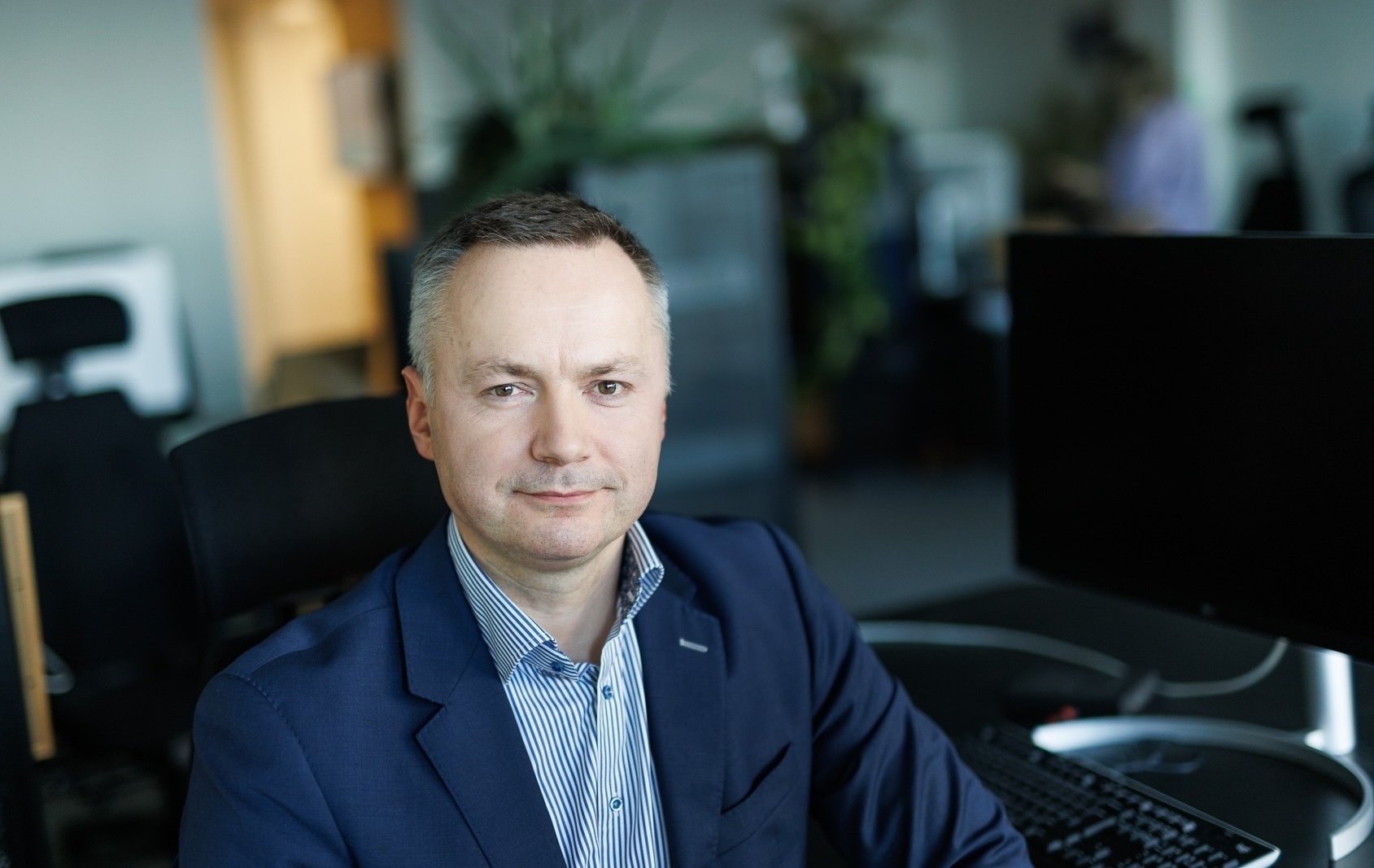
By Toms Nāburgs, "Sunly's" country manager for Latvia
Nearly a year has passed since Latvia disconnected from the BRELL electricity network. This step has demonstrated that a resilient energy system in Latvia depends on diversified generation sources and the ability to store renewable energy and transform it into firm capacity. Battery Energy Storage Systems (BESS) play a key role here. In this context, Latvia has taken a significant step forward: Latvia’s electricity transmission system operator, “Augstsprieguma tīkls”, has issued the first permit for a hybrid park that will integrate solar, wind and battery storage under a single grid connection. Such hybrid parks have rapidly become an industry standard. In countries such as the United Kingdom and Italy, BESS markets are expanding at pace, while Hungary, Austria and Poland are investing billions in this infrastructure. Latvia cannot afford to fall behind.
Solar, Wind and Battery Storage Together
Until now, only combinations of solar generation with battery storage, or stand-alone wind parks, had been approved. Sunly’s hybrid park is the first project in Latvia to bring all three components together. It has received all the necessary permits, completed the initial Environmental Impact Assessment (EIA), secured approval of the local spatial plan, and undergone an additional Strategic Environmental Assessment. The project is now entering the design phase. We also hope it will not remain the only example of its kind in Latvia, as such solutions are critically important not only for the energy sector but for national security.
Turning Renewables into Firm Capacity
Solar and wind energy are inherently intermittent. Solar generation is most effective in the summer months, while wind potential peaks in the second half of the year from October to March. On average, solar plants achieve around 12% annual utilisation, while wind can reach up to 40%. BESS compensates for this variability and converts renewable generation into firm, dispatchable capacity. By combining solar, wind and BESS at a single connection point, it is possible to significantly improve system efficiency, making better use of transmission infrastructure, lowering electricity prices, and providing additional system reserves in critical situations.
In Latvia, the importance of BESS has grown particularly since the Baltic States disconnected from the BRELL grid in February this year. We now maintain frequency ourselves and operate a balancing market, which requires greater system flexibility. The more decentralised the energy system, the more resilient it is to external risks.
An Essential Link in the Energy Value Chain
BESS is becoming an indispensable part of the energy value chain and one of the most important tools for ensuring security of supply. This is clearly demonstrated by experience across Europe. The United Kingdom and Italy are currently among Europe’s leading markets for BESS development, supported by clear regulatory frameworks and strong government backing. Central Europe is also emerging as a significant BESS investment region, with Hungary, Austria and Poland attracting multi-billion-euro investments in recent years.
Enabling Hybrid Energy: Why Regulation Must Keep Pace
Hybrid parks-where multiple technologies such as solar, wind and battery storage are combined under a single grid connection-represent innovative and forward-looking solutions that are increasingly attractive to international investors. Financing for Sunly’s project in the Valmiera region involves major international institutions, including the European Bank for Reconstruction and Development, the European Investment Bank, SEB, and other partners.
To attract investment into projects of this scale and complexity, it is essential that the regulatory framework enables the combination of multiple technologies at a single connection point. In recent years, the energy sector has proven to be one of the key pillars of national development, with a strong capacity to attract foreign capital. Large-scale energy infrastructure projects cannot be financed solely from domestic resources. According to Latvia’s energy strategy to 2050, at least €34.4 billion in investment will be required across the sector - a target that cannot be achieved without sustained international investment.
Cooperation at All Levels
The next crucial step is to ensure that these first practical examples convincingly demonstrate the value that hybrid parks bring to Latvia’s energy system. This requires efficient, professional and well-coordinated work by the responsible authorities-most notably Latvia’s transmission system operator, “Augstspriegumatīkls”, and the State Environmental Service, whose contribution merits particular recognition.
At the same time, developers carry a clear responsibility of their own: to deliver projects transparently and professionally, to maintain close and continuous dialogue with local communities, and to communicate clearly both the technical and economic benefits of such projects. The higher the quality of these first implementations, the faster Latvia will be able to build a modern,secureand sustainable energy infrastructure.
Latvia’s energy sector is now at a turning point. Hybrid parks that combine solar, wind and battery storage under a single grid connection - together with energy storage systems - are becoming a practical, deployable solution rather than a distant vision. The first project of this kind demonstrates that Latvia has all the prerequisites to become a technologically advanced, security-focused energy system. The key challenge now is not to lose momentum, but to seize this moment as an opportunity for a decisive step forward.